Fair and timely wages are essential to journalists’ dignity, safety, and independence. Freedom Network’s digital campaign calls for the immediate constitution of the 9th Wage Board and effective enforcement of existing wage protections. Audience responses showed that low, delayed, or unpaid salaries — especially for contract workers and journalists outside major media centres — are a livelihood crisis that demands urgent action.
“The time for commitments on paper has passed; journalists need fair pay, enforceable protections, and action now,” the media watchdog said.
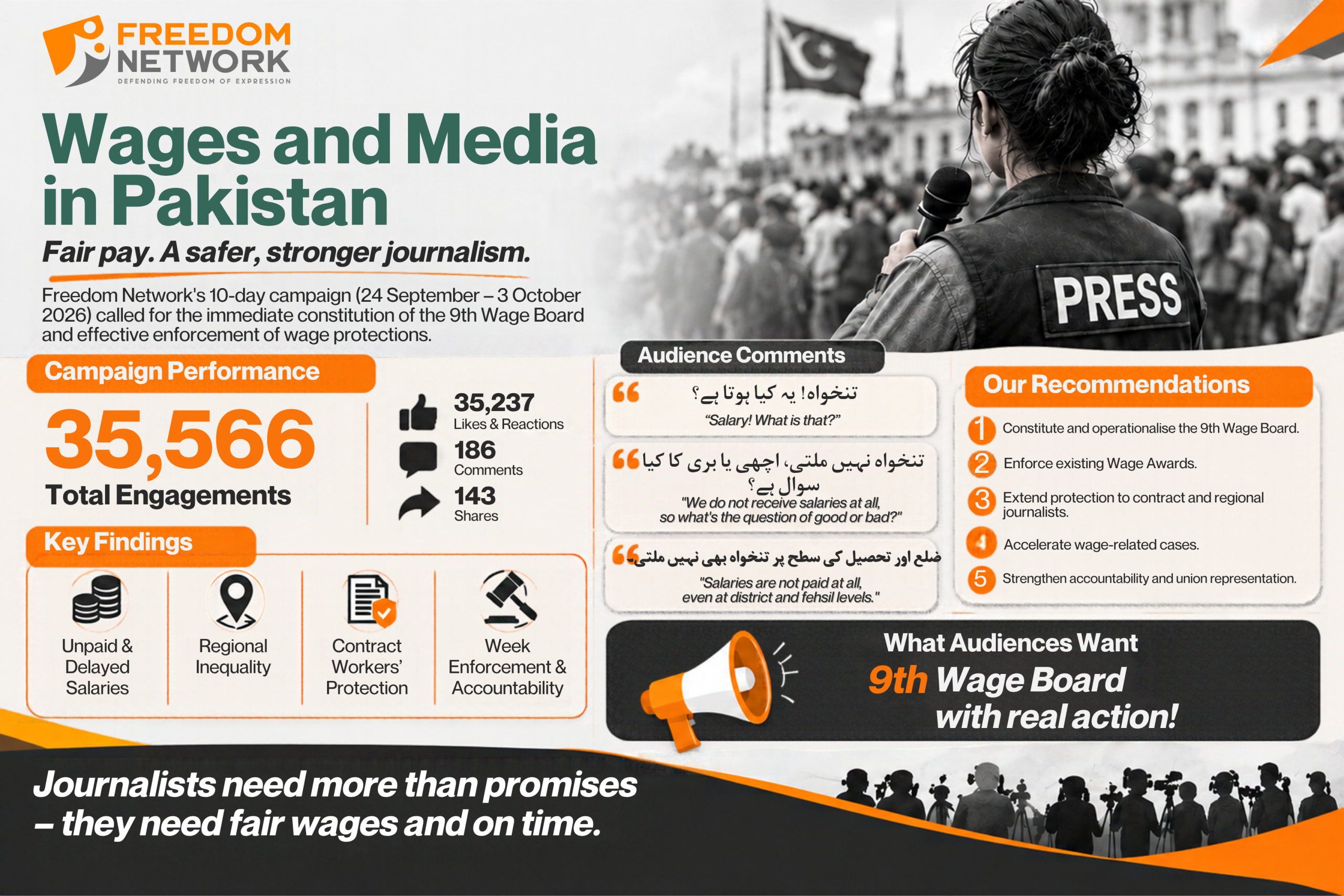
The 10-day campaign, held from 24 September to 03 October 2026, drew urgent attention to the economic hardships facing journalists and media workers.
The campaign generated 35,566 engagements, underscoring strong public interest in the issue and the need for action.
Campaign content explained the law governing wages for print media journalists and workers and featured video messages from union leaders. Audience discussion reinforced calls for the 9th Wage Board while highlighting low pay, delayed salaries, insecure contracts, and weak enforcement.
Respondents treated wage insecurity not simply as a policy gap but as a direct threat to journalists’ livelihoods, particularly where staff are expected to work despite irregular or unpaid salaries.
Of the campaign’s 35,566 engagements, 35,237 were likes or reactions, 186 were comments, and 143 were shares. The opening teaser—“Do journalists receive good salaries?”— generated the most interaction, especially in the comment section, signalling strong concerns about pay and working conditions.
Analysis of Audience Comments
The dominant concern was not whether salaries were adequate, but whether they were paid at all or paid on time. Comments such as “تنخواہ! یہ کیا ہوتا ہے؟” (“Salary! What is that?”) and “تنخواہ ہی نہیں ملتی اچھی بری کا کیا سوال بھائی” (“We do not receive salaries at all, so what is the question of whether they are good or bad?”) captured the depth of frustration.
A further comment—“آپ کا سوال اب یہ ہونا چاہیے کہ کیا صحافیوں کو وقت پر تنخواہ ملتی ہے؟ اچھی تنخواہ تو اسکے بعد کی بات ہے۔” (“Your question should be whether journalists receive salaries on time. A good salary is a matter to consider after that.”) — placed timely payment ahead of the level of remuneration.
Some commenters also alleged that journalists are expected to generate advertising or business revenue instead of receiving regular salaries, shifting financial responsibility from media organisations to workers.
These audience claims, however, have not been independently verified.
Regional Inequality and Contract Work
Journalists working outside major media centres were seen as particularly vulnerable. One respondent stated, “ڈسٹرکٹ اور تحصیل سطح پر تنخواہ ہی نہیں ملتی” (“At district and tehsil levels, salaries are not paid at all”). Comments from Balochistan also raised unequal access to union membership, welfare support, and professional opportunities outside Quetta. Contract workers were similarly described as excluded in practice from protections or benefits available to regular employees.
Implementation and Accountability
Commenters questioned the value of constituting a new Wage Board without enforcing existing awards. Reports of wage cases remaining unresolved for years reinforced concerns about slow courts, tribunals, and other institutions. The audience’s message was consistent: legal mechanisms must deliver timely recovery of unpaid wages and apply equally to contract and regular employees.
Union Representation and Campaign Support
Views of journalists’ unions were mixed. Some commenters criticised weak representation, while others defended bodies such as the Balochistan Union of Journalists for their advocacy, press-freedom work, and welfare support. Despite this scepticism, the campaign received broad support and praise for bringing wage insecurity into public debate.
Recommendations
The campaign findings point to five immediate priorities for government, media organisations, Wage Board institutions, and journalists’ unions:
- Constitute and operationalise the 9th Wage Board without delay, with a public timetable, clear responsibilities, and a mechanism for monitoring compliance.
- Enforce existing Wage Awards immediately, including recovery of unpaid and delayed salaries and penalties for persistent non-compliance.
- Extend equal protection to all eligible workers, including contract employees and journalists working at district, tehsil, and village levels.
- Accelerate wage-related complaints and cases through time-bound procedures in tribunals, courts, and relevant institutions.
- Strengthen accountability and representation by requiring media organisations to maintain transparent salary practices and unions to provide accessible membership, welfare support, and reporting channels across regions.
Overall Assessment
The campaign generated substantial engagement and a clear public message: journalists need more than a new Wage Board on paper. They need salaries paid fully and on time, equal protection across employment categories and regions, faster remedies, and institutions that are accountable for implementation.
By linking wages to employment security, regional inequality, union representation, and institutional enforcement, the responses show that economic protection for journalists is essential to the long-term sustainability of independent journalism in Pakistan.