Five cases of different threat categories were recorded against journalists across Pakistan during May 2026, including actual legal action and threat to murder. These cases were categorized as follow:
Actual legal action (civil or criminal + specific law)
Threat to murder
These incidents were reported through Pakistan Press Club Safety Hubs Network; a program FN is managing since 2016 in collaboration with the six largest press clubs — Lahore, Multan, Quetta, Peshawar, Gilgit (Gilgit Baltistan) and Muzaffarabad (Azad Jammu and Kashmir). The program monitors and documents violations against media, its practitioners and media workers while providing essential support to journalists at risks.
Actual legal action (civil or criminal + specific law)
Journalist: Maqbool Jaffar, Freelance Reporter, Quetta (Balochistan)
Threat Actor: State Actors
Incident Summary:
On 9 May 2026, journalist Maqbool Jaffar, a freelance reporter based in Quetta, was arrested by the National Cyber Crime Investigation Agency (NCCIA) over allegations of sharing objectionable, provocative, and defamatory content against senior government officials, citizens, and state institutions through social media platforms.
According to the NCCIA, an inquiry found that Jaffar had allegedly disseminated “unlawful” and “propaganda-based content” online. Authorities claimed that despite receiving notices and warnings, he continued to publish the content. Three separate FIRs were registered against him. One complaint was filed by Babar Khan, Secretary of Communication and Works Department and former Principal Secretary to the Chief Minister of Balochistan, while two provincial ministers filed the other complaints.
Following his arrest, Jaffar was produced before Judicial Magistrate-XI in Quetta, who granted him bail in all three FIRs.
Threat Developments:
Maqbool Jaffar stated that during his custody, officials warned him against producing future vlogs critical of government officials. The arrest and criminal proceedings have raised concerns regarding the use of cybercrime and defamation-related laws against journalists for online expression and commentary on public affairs. The reported warnings issued during detention may contribute to self-censorship and have a chilling effect on journalistic reporting and digital media content.
Actual legal action (civil or criminal + specific law)
Journalist: Muhammad Saad, Anchorperson / YouTuber, Eon News, Lahore (Punjab)
Threat Actor: State Actors
Incident Summary:
On 3 May 2026, Muhammad Saad, a YouTuber and anchorperson associated with Eon News in Lahore, was arrested by the Punjab Counter-Terrorism Department (CTD) in connection with allegations of links to a proscribed organisation.
According to the First Information Report (FIR), the arrest was made following an intelligence-led operation conducted on 27 April 2026 near GPO Chowk, at The Mall in Lahore. CTD officials claimed they received information from an informer regarding an individual allegedly involved in recruiting people for a banned organisation and allegedly distributing “prohibited literature.”
During the operation, the suspect identified as “Muhammad Saad” was taken into custody. Authorities reported recovery of multiple copies of literature linked to a proscribed organisation and an alleged membership card. The FIR further mentions a second arrest in a related operation involving another individual, with similar material reportedly recovered.
The case was registered under Sections 11(2) and 11-F(2) of the Anti-Terrorism Act, 1997. Investigations were initiated, and the accused along with recovered material was handed over to the investigation authorities.
Separately, the family of the accused disputed the official account, alleging that masked individuals conducted the arrest and claiming that the FIR was registered under pressure. The media outlet associated with the journalist stated that legal action would be pursued in response to the arrest.
Threat Developments:
The case involves formal arrest under anti-terrorism provisions of law and ongoing investigation. While the allegations are severe and outside the scope of journalism activity as described in the FIR, the individual’s association with a YouTube news platform raises concerns regarding potential overlap between national security charges and digital media activity. The dispute raised by the family also highlights contested narratives around the nature and circumstances of the arrest.
Actual legal action (civil or criminal + specific law)
Journalist: Imtiaz Chandio, Journalist / Social Media Commentator, Karachi (Sindh)
Threat Actor: State Actors
Incident Summary:
On 10 May 2026, police in Hyderabad, Sindh, registered a terrorism-related FIR against journalist Imtiaz Chandio following a complaint filed by the assistant secretary of the Sindh Public Service Commission (SPSC).
The complaint alleged that Imtiaz Chandio used provocative, threatening, abusive, and inflammatory language in Facebook videos targeting the SPSC Chairman Waseem Ahmed, senior Sindh government officials, and other public office holders. It further stated that the content was intended to incite hatred, create public disorder, and provoke unlawful action against state institutions and their representatives.
The FIR was lodged at GOR Colony police station, Hyderabad, and triggered criticism from legal experts, journalists, and social media users who viewed the case as an attempt to suppress critical speech and accountability reporting. The journalist rejected the allegations, calling the FIR politically motivated and linking it to his reporting on alleged irregularities within the SPSC.
Imtiaz Chandio also alleged that the case was part of an effort to silence dissent and called for an independent inquiry into corruption allegations related to public sector recruitment. As of the latest updates, there was no official response from the Sindh government or SPSC leadership regarding these claims.
Threat Developments:
The registration of a terrorism-linked FIR against a journalist over social media commentary has intensified concerns about the use of anti-terrorism laws in cases involving online expression and institutional criticism. The case remains under investigation and continues to raise questions about press freedom, digital speech, and the proportionality of legal responses to journalistic commentary.
Actual legal action (civil or criminal + specific law)
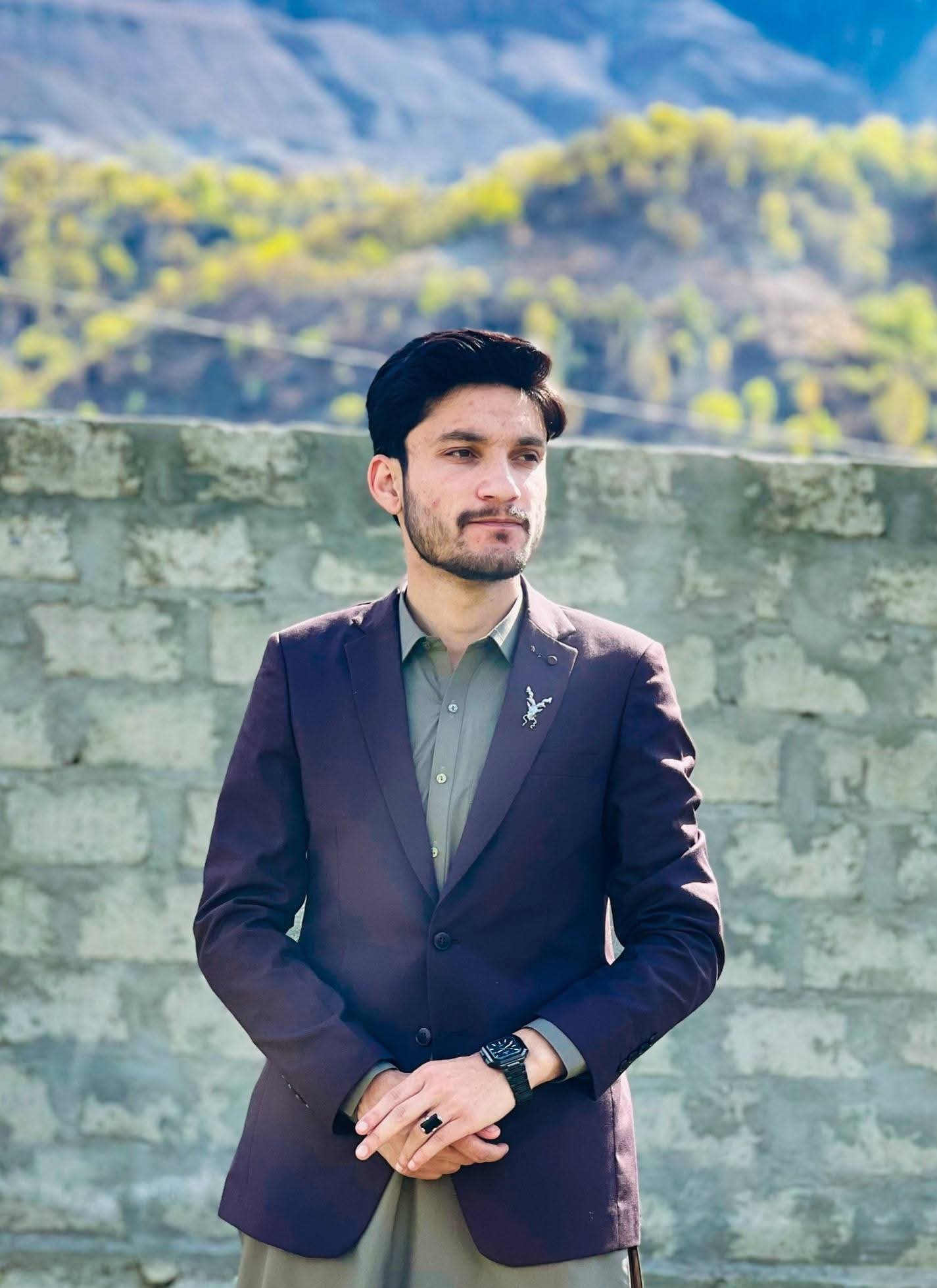
Journalist: Adnan Rawat, Reporter, Skarkoi, Gilgit-Baltistan
Threat Actor: State Actors
Incident Summary:
On 31 March 2026, journalist and vlogger Adnan Rawat was arrested by Gilgit City Police inSkarkoi, Gilgit-Baltistan, over allegations of circulating a false or misleading news item on social media. Authorities claimed the content was linked to sensitive incidents in the region and contributed to public disorder and misinformation.
Following his arrest, he was produced before the Anti-Terrorism Court in Gilgit on 1 April 2026 and placed under repeated physical remand. According to case details, he was continuously remanded multiple times in police custody through court orders, resulting in approximately 50 days of cumulative physical remand.
The FIR reportedly includes allegations of preparing and circulating a fabricated list related to individuals involved in unrest, which authorities claim was falsely linked to state institutions and security forces. The case includes charges under sections of the Pakistan Penal Code along with anti-terrorism provisions, including allegations of incitement, forgery, and creating public fear.
During the course of proceedings, journalist bodies in Gilgit-Baltistan strongly criticized the arrest and prolonged detention, calling it an attack on press freedom and demanding his release. A joint committee of journalists and legal representatives was also formed to pursue the case.
Threat Developments:
The case has developed into a prolonged detention under criminal and anti-terrorism laws, drawing attention to the use of extended physical remand and the proportionality of charges against a digital journalist. Press organizations continue to monitor the case and advocate for his release, citing concerns over press freedom and due process.
Threat to murder
Journalist: Rai Muhammad Iqbal, Cameraman, City 41, Faisalabad (Punjab)
Threat Actor: Non-State Actor
Incident Summary:
On 8 May 2026, journalist Rai Muhammad Iqbal, a cameraman associated with City 41, reported receiving death threats in Tandlianwala, Faisalabad. According to the FIR, Iqbal had previously seen social media videos in which the accused allegedly used abusive language against journalists, politicians, and Pakistan, while also issuing threats.
Iqbal stated that at approximately 11am, he was present at a local bus stand in Tandlianwala along with two witnesses when the accused allegedly approached them. According to the complaint, Iqbal questioned the accused regarding the threatening content circulating on social media. The accused allegedly became agitated, produced a pistol, pointed it at Iqbal and the accompanying witnesses, and threatened to kill them before leaving the scene while brandishing the weapon.
Following the complaint, police registered FIR No. 217/26 at City Police Station Tandlianwala under Sections 341 and 506 of the Pakistan Penal Code.
Threat Developments:
The incident prompted the registration of a criminal case and referral of the matter for investigation. The alleged use of a firearm and explicit death threats against a journalist raise serious concerns regarding the safety of media professionals and the risks faced by journalists when confronting or reporting on individuals engaged in threatening conduct. The investigation remained ongoing following the registration of the FIR.
Threats, Attacks, and Harassment against Various Types of Media:
Four digital and one other media professional received threats during May 2026.
Threat Actors:
In four cases, state actors were suspected to be involved, while one case non-state actors were believed involved.
Caption:
Adnan Rawat’s prolonged detention in Gilgit-Baltistan over social media reporting raises serious concerns about press freedom and due process in Pakistan.